
From November 16 to 20, Vice-President Mai Liqiang led a delegation to the United Kingdom, visiting Manchester, Birmingham and London. The delegation attended the China-UK Clean Energy Cooperation Forum and paid visits to several world-renowned universities, actively expanding WUT’s international cooperation in education and collaborative innovation in clean energy, advanced materials and intelligent transportation.

On the afternoon of November 17, Mai Liqiang was invited to address the “2025 China-UK Clean Energy Cooperation Forum” in Manchester. Convened to implement the important consensus reached by the leaders of China and the UK, the forum covered hydrogen energy and the broader clean-energy spectrum. It was dedicated to building a broader cooperation platform for Chinese and British enterprises to deepen practical cooperation. In his speech, Mai pointed out that Wuhan University of Technology has responded actively to China’s “dual-carbon” strategy and national hydrogen-energy development plan, achieving a series of breakthroughs in clean energy. He stated that WUT is ready to leverage the forum as a catalyst to further substantive cooperation with UK partners in education, technology and industry, jointly exploring new pathways for hydrogen and other clean energies and contributing educational strength and technological momentum to the global energy transition.
From November 17 to 19, the delegation visited the University of Manchester, the University of Birmingham, Imperial College London, and Brunel University.
At the University of Manchester, the delegation held specialized discussions with representatives from disciplines including Computer Science, Materials and Physics. Both sides conducted in-depth exchanges on establishing a “point-to-line-to-plane” graded cooperation mechanism spanning materials, physics, computer science, mechanical and chemical engineering, and agreed to advance research collaboration and explore more synergistic development paths.

At the University of Birmingham, the delegation met with Vice-Chancellor Jon Frampton and heads of the College of Engineering and the International Office. The two parties agreed to continue consultations on the details of a talent-training agreement and to move toward signing a formal cooperation contract. Research collaboration will focus on mechanical engineering, new-energy vehicles and lightweight materials, further strengthening cooperation with relevant research teams at WUT.
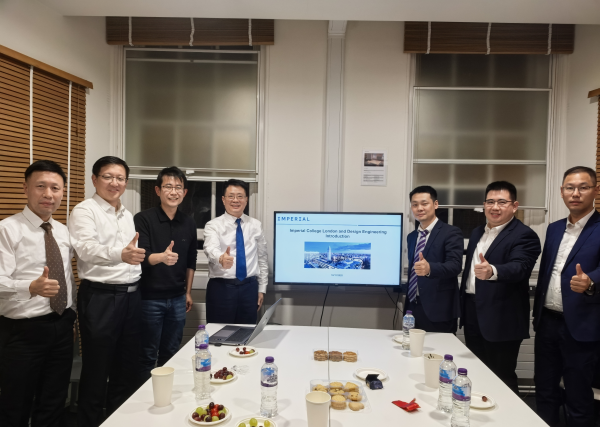
At Imperial College London, the delegation conducted a thematic seminar with the Dyson School of Design Engineering on models for cultivating future talent in cutting-edge interdisciplinary engineering. The two parties focused on aligning with the China Scholarship Council sponsorship programs, exploring mechanisms for joint postgraduate training, and advancing cooperation in research areas such as energy-storage materials and nano-devices.

At Brunel University London, the delegation met with Vice-Chancellor Trevor Hoy, Vice-Chancellor Professor Hua Zhao and professors from the Department of Civil Engineering. Both universities agreed to give priority to joint-education programs, strengthen student mobility, and deepen research collaboration. They also plan to launch short-term summer exchange programs and deepen collaborative research in mechanical engineering, metallurgy and metallic materials.
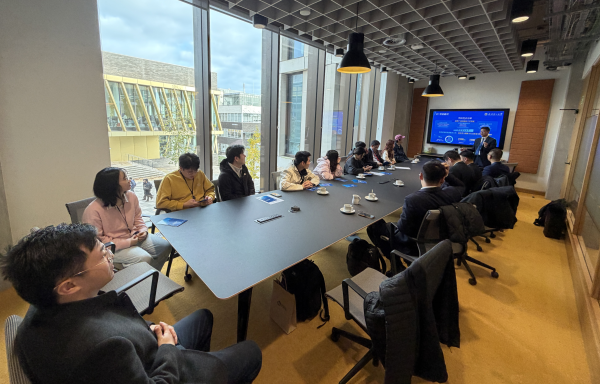
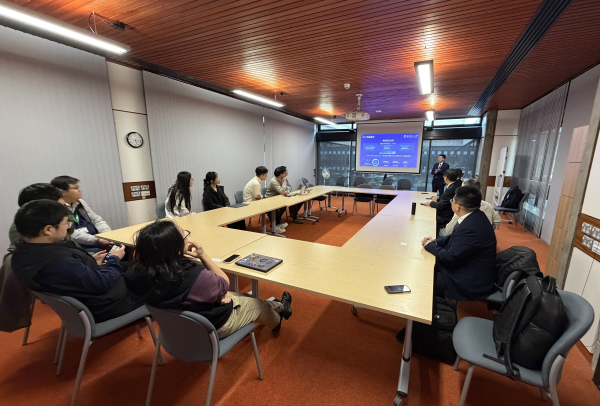
During the visit, the delegation hosted overseas talent-recruitment briefings and exchange sessions at Imperial College London and the University of Birmingham, attracting young scholars from the host universities and surrounding regions.
This visit implemented the Ministry of Education’s call to deepen educational and scientific cooperation with Europe and was listed among the 2025 tasks approved by the university’s Education Opening-up Leading Group. The visit effectively promoted all-round, multi-level exchanges and cooperation with UK universities and holds significant strategic importance.
Representatives from the International Office, the School of Automotive Engineering, the School of Naval Architecture, Ocean and Energy Power Engineering, the Institute of New Materials and the Intelligent Transportation Systems Research Center accompanied the visit.
Written by: Wang Yanbing
Rewritten by: Xu Hanyue
Edited by: Liang Muwei, Li Tiantian
Source: International Office
|
|