
Recently, the research team led by Professor You Ya has made important progress in the field of thermo-responsive electrolytes. The findings, titled “Ultrafast thermo-responsive electrolyte for enhanced safety in lithium metal batteries”, have been published in Nature Energy, attracting significant attention within the discipline. Meanwhile, Professor Sang-Young Lee, Academician of the National Academy of Engineering of Korea, published a commentary entitled “Solidifying safety on cue” in Nature Energy, fully affirming the design rationale of this thermo-responsive electrolyte.
High-temperature-induced separator failure leading to internal short circuits remains a critical challenge restricting the thermal safety of batteries. This study proposes a thermo-responsive electrolyte capable of undergoing an ultrafast liquid–solid phase transition upon heating, offering an efficient strategy to mitigate thermal runaway. The monomers undergo cationic polymerization and can complete solidification within seconds at a temperature threshold close to the melting point of the separator. This rapid phase transition forms an effective thermal barrier, preventing internal short circuits and thermal runaway. The electrolyte ensures stable battery operation even at a high temperature of 90 °C, and can still support normal battery function after thermal solidification. Its adjustable phase transition temperature makes it compatible with various commercial separators. This ultrafast thermo-responsive electrolyte opens up a new avenue for the design of safe batteries.
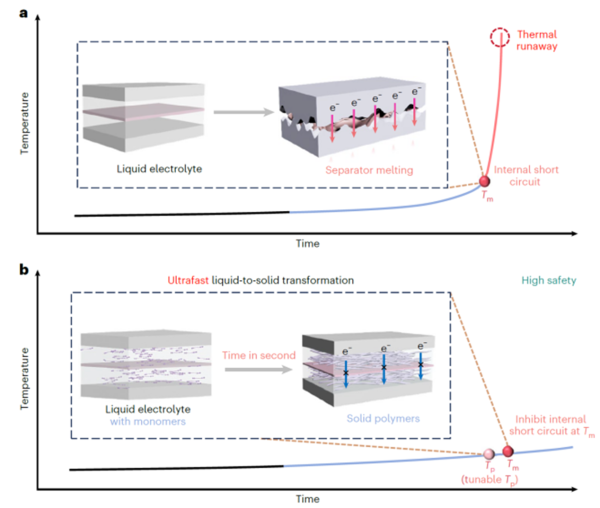
Figure 1 Design Strategies for Electrolytes of High-Safety Lithium Batteries
Previously, Professor You Ya’s team has previously achieved a series of relevant results in temperature-responsive electrolytes. To address the challenge that traditional electrolytes cannot simultaneously meet the requirements of stable operation at high and low temperatures, temperature-responsive solvation was realized by regulating dipole-dipole interactions, enabling sodium-ion batteries to operate stably in a wide temperature range of -60 to 55 °C (Nat. Commun. 2024, 15, 8866). To improve the low-temperature performance of batteries, the team expanded the operating temperature range of electrolytes by adjusting the solvation entropy of electrolytes. This temperature-adaptive electrolyte ensures excellent low-temperature performance of full batteries, with a capacity retention rate of 90.6% after 400 cycles at -40 °C. The importance of entropy adjustment was clarified, providing a new perspective for the design of low-temperature electrolytes (Adv. Mater. 2023, 35, 2301817). Building upon the fundamental principles of entropy regulation, the team also analyzed challenges faced by conventional electrolytes under extreme conditions—including aqueous, non-aqueous (organic), and solid-state systems—while demonstrating how entropy engineering can help overcome these limitations. Finally, a summary and outlook on the practical feasibility and future development of high-entropy electrolytes under extreme conditions were provided (Joule 2024, 8, 2467). The above research on temperature-responsive electrolytes provides theoretical and technical support for further expanding the application fields of batteries, breaking through the limits of battery applications, and improving battery safety.
You Ya is a Professor, Department Director, and Doctoral Supervisor at the International School of Materials Science and Engineering (School of Materials and Microelectronics), Wuhan University of Technology. She has received honors, including the MIT Technology Review’s “Innovators Under 35 Asia Pacific (TR35 Asia Pacific)”, the 2024 Energy Lectureship Awards in Energy Storage-Early Career, the Carbon Energy Camellia Award, the Pioneer Award for New Era Youth, the Hubei Youth May Fourth Medal, and the Hubei Good Youth Who Strive for Progress. She serves as Topic Editor of the journal ACS Energy Letters and Editorial Board Member of Communications Materials (Nature Portfolio). She is also a Director of the Sol-Gel Branch of the Chinese Ceramic Society and a Youth Director of the Solid State Ionics Branch of the Chinese Ceramic Society. In recent years, her team has led and participated in more than ten projects, including the Young Scientists Project of the National Key R&D Program, the Cultivation Project of the Major Research Plan of the National Natural Science Foundation of China, the General and Youth Fund Projects of the National Natural Science Foundation of China, and several “Reveal the Leader” initiatives. She has published more than 90 papers in international authoritative journals such as Nat. Energy, Nat. Rev. Mater., Nat. Commun., Joule, Adv. Mater., and Angew. Chem. Int. Ed., was selected as a Clarivate Highly Cited Researcher in 2025, and her research results have been featured in Nature Reviews Materials and Nature Energy.
Written by: Yang Chao
Rewritten by: Xu Hanyue, Lin Qiaochu
Edited by: Liang Muwei, Li Tiantian
Source: International School of Materials Science and Engineering (School of materials and Microelectronics)
|
|