
A research team from Wuhan University of Technology (WUT) has made a significant breakthrough in the development of micro energy storage batteries, enabling stable operation of drones without altering the aerodynamic shape of their blades. The relevant achievement was selected among “Top Ten Annual Advances in China’s Chip Science” recently.
As drones, electric vertical take-off and landing (eVTOL) aircraft, and other equipment are increasingly widely used, the low-altitude economy is accelerating its implementation in areas such as logistics transportation, urban management, and emergency rescue. Flight safety has become a key guarantee for the development of the low-altitude economy. Yang Wei, a postdoctoral fellow at the School of Materials Science and Engineering of WUT, stated, “Safety accidents caused by fatigue fractures or bending of the rotor blades would greatly hinder the development of the low-altitude economy. Therefore, we considered installing a monitoring sensor on the blades to ensure flight safety.”
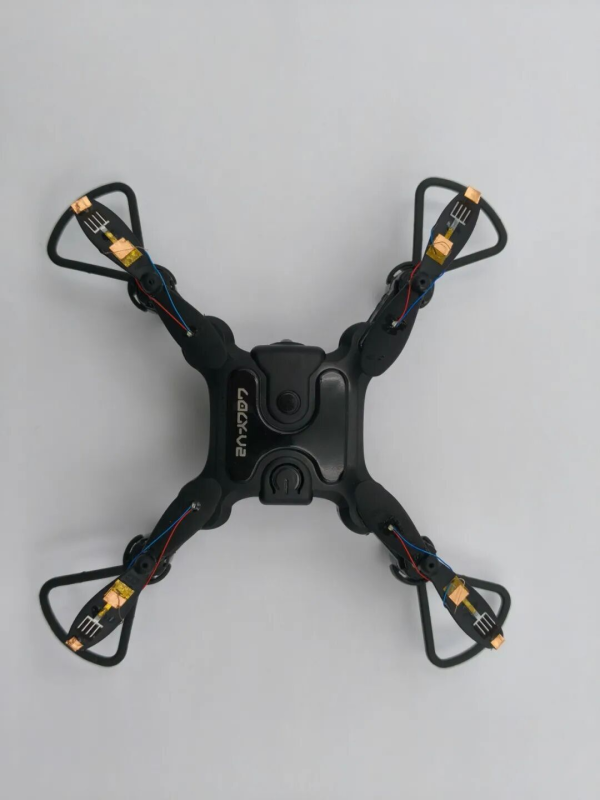
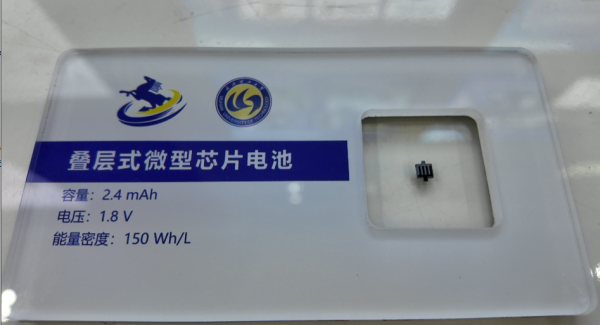
Traditional button batteries, due to their thickness and weight, alter the aerodynamic shape of drone blades after installation. Moreover, when rotating at high speeds, they are easily ejected by centrifugal force, posing significant safety risks. To address this challenge, Yang Wei’s team, leveraging their earlier research, developed a chip-type micro battery with a thickness of only 100 micrometers and a weight of just 50 milligrams.
Yang Wei explained, “We used a domestically produced piece of equipment to process metal foil into the shape of interdigitated electrodes, then grew nano energy storage materials on them. By eliminating the relatively heavy and large silicon wafer, we are not only free from limitations posed by foreign lithography machines, but also achieve lower costs. The cost to produce a single micro battery of this type used to exceed 30 yuan. Now, with the fully domestic process, the cost per unit is around 0.4 yuan.”
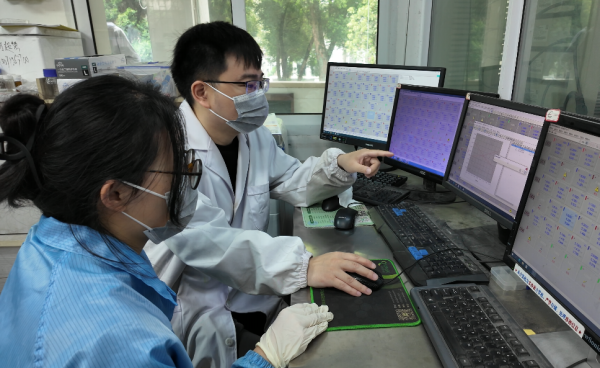
Through technological breakthroughs, Yang Wei’s team also overcame the bottleneck of electron/ion conduction kinetics under high loads, enabling the mass production of ultra-high-power micro energy storage batteries. Compared with commercially available coin-type lithium-ion batteries of the same size, the maximum current of this micro energy storage battery is 700 times higher, placing it at an internationally leading level. Yang Wei stated, “Traditional micro button cell batteries, around 4 millimeters in size, typically output only tens of microamps, making it difficult to drive sensing systems. To overcome this problem, we used nano-growth technology to give the battery higher energy density and power density. When operating on drone blades, it can thereby power the entire sensing system.”
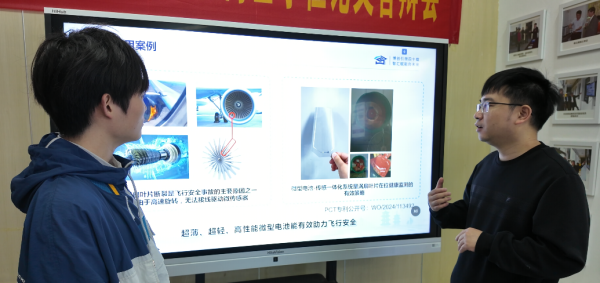
Yang Wei noted that several companies have already expressed interest in investing, which would help accelerate the industrial application of this technology.
Written by: Li Qi, Fu Pan, Xie Xiaoqin
Rewritten by: Mei Mengqi
Edited by: Li Huihui, Li Tiantian
Source: WeChat Official Account of Wuhan Education Station
|
|