
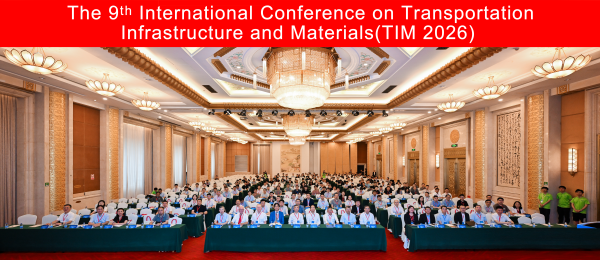
From June 12 to 14, the 9th International Conference on Transportation Infrastructure and Materials (TIM 2026) was held in Wuhan. Co-hosted by the International Association of Chinese Infrastructure Professionals (IACIP) and Wuhan University of Technology (WUT), the conference brought together more than 500 participants from ten countries and regions, including China, the United States, the Netherlands, Canada, South Africa, Russia, the United Kingdom, and Singapore. Participants included academy fellows, renowned scholars, industry representatives, young scholars, and students. They engaged in in-depth exchanges on cutting-edge topics such as innovation in transportation infrastructure materials, green and low-carbon development, intelligent construction, and the enhancement of engineering resilience, and jointly explored new pathways for high-quality development in the field of transportation infrastructure and materials.
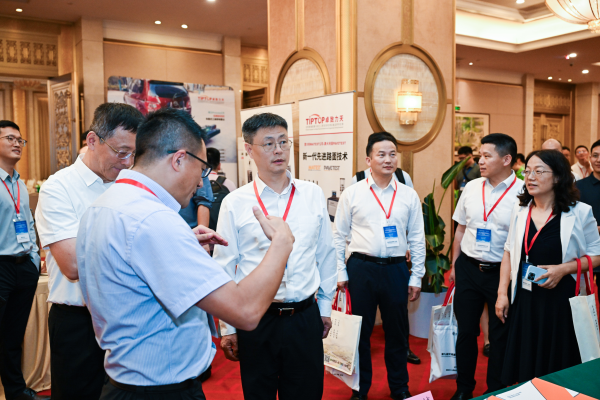
WUT President Wang Fazhou visited the corporate exhibition area, where he held in-depth discussions with representatives of the exhibitors. He also attended the welcome reception and delivered a speech. Wang noted that the university has consistently served national strategies and industry needs, promoted interdisciplinary integration among its strong disciplines such as materials science, transportation, and civil engineering, and actively built open and international platforms for academic exchange and cooperation. He expressed the hope that the conference would serve as a bridge to further deepen exchanges and cooperation between WUT, IACIP, universities, and enterprises at home and abroad, and jointly advance scientific and technological innovation, talent cultivation, and the transformation of research outcomes into practical applications in the field of transportation infrastructure and materials.
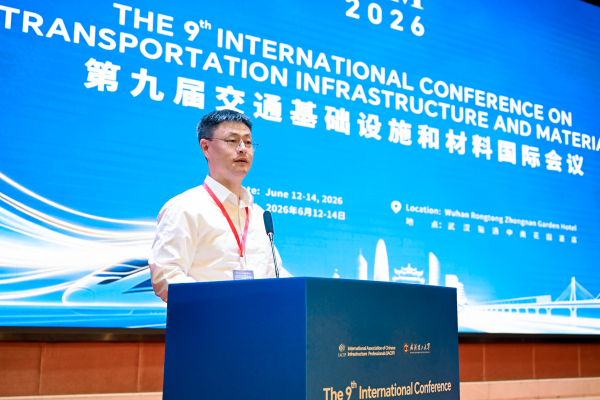
The opening ceremony was chaired by Jenny Liu, former President of IACIP and a named professor at Missouri University of Science and Technology. Professor Liu Zuyuan, Deputy Chair of the University Affairs Committee of Wuhan University of Technology; Professor Wu Shaopeng, General Chair of TIM 2026; and Professor Zhang Xiong, President of IACIP, delivered speeches in succession. Heads of relevant administrative departments, including the Academy of Science and Technology Development, the Office of International Exchange and Cooperation, and the university’s Association for Science and Technology, as well as heads of the organizing units, attended the opening ceremony.
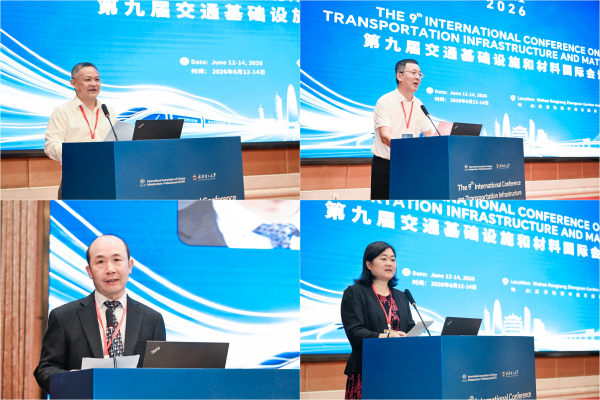
Keynote addresses were delivered by Chinese and international academy fellows, including Jiang Desheng and Wang Fuming, Fellows of the Chinese Academy of Engineering; Dai-Chao Sheng, Fellow of the Australian Academy of Technological Sciences and Engineering; Qingfa Zhuang, Fellow of the Canadian Academy of Engineering, who attended online; and Kim Jonathan Jenkins, Fellow of the South African Academy of Engineering. Renowned experts and scholars from institutions such as Delft University of Technology, Michigan Technological University, Chang’an University, Tongji University, and Chongqing Jiaotong University also delivered keynote addresses.
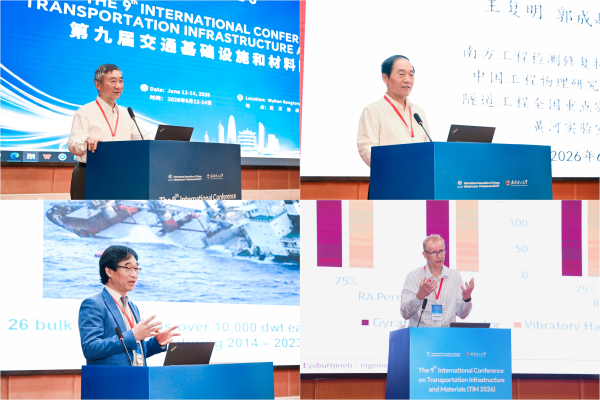
The conference featured 13 keynote addresses, eight parallel sessions, 131 technical presentations, 149 young scholar presentations, 58 student competition presentations, 20 poster presentations, and six thematic workshops. The topics covered a wide range of areas, including transportation infrastructure materials, infrastructure durability and performance enhancement, green and low-carbon technologies, resource recycling technologies, intelligent construction, and digital assessment.
TIM 2026 received support from a number of universities, research institutions, academic societies, and enterprises in China and abroad, as well as from the Donghu Science Conference Special Program for Academic Exchange. The conference provided an international platform for open sharing, interdisciplinary integration, and collaborative innovation among experts and scholars from China and abroad. It further consolidated consensus on innovation-driven development in the field of transportation infrastructure and materials, and injected new momentum into the high-quality development of the industry and international academic cooperation.
Written by: Chen Meizhu, Xiong Bin
Rewritten by: Li Huihui
Edited by: Mei Mengqi, Li Tiantian
Source: School of Materials Science and Engineering, Silicate Materials Engineering Research Center
|
|